[

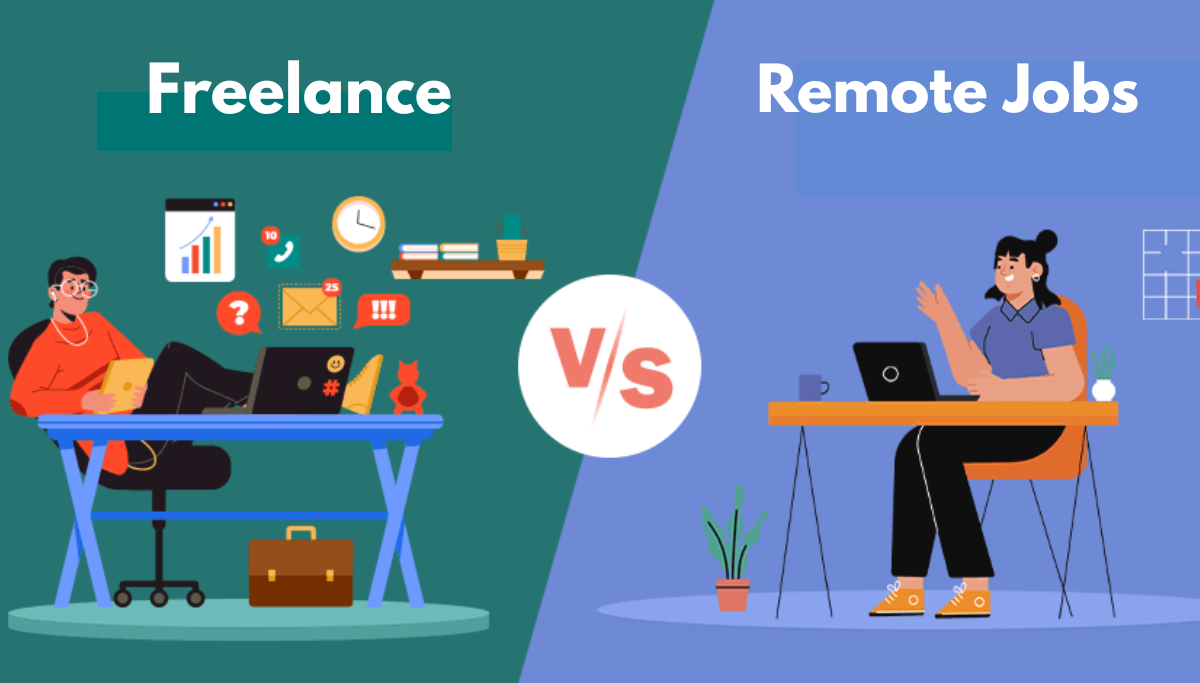
In the modern digital age, Making Money Online has become more accessible than ever. Two of the most popular ways people earn online today are freelancing and remote jobs. Both options offer flexibility, freedom, and the potential to make a substantial income from anyway in the world. But which one is better for earning online? In this blog, we’ll explore the key differentces between freelancing and remote jobs, their pros and conscience, and how to choose the best path based based on your skills, lifestyle, and income goals.
What is freelancing?

Freelancing involves offering your services to clients on a project or contrast basis. Freelancers are self-compensated and typically work with multiple clients instead of committing to one employer. Common Freelancing Services Include Graphic Design, Writing, Programming, Digital Marketing, and Video Editing.
Freelancing allows you to set your own rates, choose your clients, and work from anyware. This Kind of Independence Attracts Many People, Espaceally However, freelancing also Demands Self-Discipline, Strong Communication Skills, and the Ability to Consistent Deliver Quality Work.
Popular freelancing platforms:
- Upwork
- Fiverr
- Freelancer
- Toptal
- Peopleperhour
These platforms act as a marketplace where freelancers can bid on projects, create service packages, and build a profile that showcases their skills and ratings. Freelancers can also operate independent by Finding Clients Through Social Media, Referrals, or Personal Websites.
What is a Remote Job?

A remote job is a full-time or part-time Employment Opportunity with you work for a company but not from their office. You might be employed on a payroll or a long-term contract, and you’re expected to full your role just like any in-offfice employee, only virtually.
Remote Jobs are typical Structured with Fixed Working Hours and Responsibilites, Just Like Like Traditional Office Jobs. These roles include customer support, project management, software development, digital marketing, virtual assistance, and more. With remote jobs, you’re still a part of a company and team, but your workplace is your home.
Popular remote job platforms:
- Remote.co
- We work remotely
- Flexjobs
- Angelist talent
- Jobspresso
- Remotive
Remote Jobs often Come With Benefits Like paid time off, Health Insurance, Retirement Plans, and Access to Training Resources. They provides a stable income source whose offering the comfort of working from home.
Key Differences Between Freelancing and Remote Jobs
|
Aspect |
Freelancing |
Remote Job |
|
Employment status |
Self-comptione |
Employee or long-term contractor |
|
Income Stability |
Varies based on clients/projects |
Fixed Monthly Salary |
|
Flexibility |
High (Choose Clients, Projects, Hours) |
Medium (Fixed Schedule in many cases) |
|
Benefits |
None (Unless Self-Provided) |
Often incidences Health Insurance, Paid Leave, etc. |
|
Job Security |
Low to medium |
Medium to high |
|
Workload Control |
You control how much to take on |
Controlled by Employer |
|
Career Growth |
Self-Driven |
Structured with promotions |
Pros and Cons of freelancing

Pros:
- Maximum flexibility in schedule and projects
- Potential for Higher Hourly Rates
- Ability to work with multiple clients and Industries
- Opportunity to build your own brand or agency
- Can scale into a full-fledged business
Cons:
- Irregular Income, Especially Early on
- No Employment Benefits Like Health Insurance
- Responsible for your own taxes and legal compliance
- Need to Constantly Pitch or Market Your Services
- Can feel isolating without a team or support system
Freelancing is ideal for individuals who have a strong entrepreneurial mindset. It requires you to manage your time, Communicate cleaned with clients, and allies look out for new Opportunities.
Pros and Cons of Remote Jobs

Pros:
- Stable Income and Consistent Work
- Employment Benefits Such as Insurance, Paid Leave, And Bonuses
- More Predictable Workflow and Expectations
- Opportunities for promotions and team collaboration
- Access to training and professional development
Cons:
- Less control over work hours and assignments
- Can still feel like a traditional 9-to-5 job
- May involve frequent virtual meetings and deadlines
- Limited Freedom to take on Outside Projects Depending on the Employer
- Potential for time zone challenges in international teams
Remote Jobs are great for that who want the security of a traditional job with the flexibility of working from anywahere. They are essayly appealed to people transitioning from office-based roles.
Which is better for earning online?

This depends on Several Factors:
- Income Goals: Freelancers have unlimited earning potential, especially if they specialize in high-demand skills such as UX design, software development, or copywriting. However, building a client base and raising your rates takes time and effort. Remote Jobs offer Fixed Salaries, which may be modest in the beginning, but they provide consistency.
- Work style: freelancing suits independent, entrepreneurial individuals who enjoy managing their own business, setting their schedules, and working on diversie projects. Remote jobs are better for that who prefer structured roles, Regular feedback, and team collaboration.
- Risk tolerance: freelancing can be risky, especially when you’re starting and do’t ha a steady stream of clients. It may take months to earn a reliable income. Remote Jobs offer a more secure path, with predictable earnings and benefits that reduction financial uncertanty.
- Career Goals: Freelancers can evolve into consultants, build an agency, or develop digital products like courses and eBooks. Remote Workers Can Rise Through Company Ranks, Gain Managerial Experience, and Receive Long-Term Job Job Stability. Both offer growth but in different directions.
- Skill Set: If you have highly specialized skills and enjoy working across varied industries, freelancing gives you More Room to Experiment and Expand Your Reach. If you’re someone who excels in team settings and seeks mentorship or leadership roles, remote jobs are a better fit.
Combining Both: The Best of Both Worlds
Many professionals start with a remote job to Gain Experience and Earn a STEADY Income While Building A Freelance Business on the side. This hybrid approach allows you to test your freelance potential with losing the security of a stable job.
For example, a digital marketer can work remotely for a company during the day and offer freelance services like seo audits or social media management in his spare time. Over time, if freelance work becomes more profitable, transitioning to full-time freelancing buildings a practical move.
Balancing bot requires good time management and cleaned boundaries, but it can lead to bot financial stability and independence.
Final Thoughts
Both freelancing and remote jobs are viable paths to make money online. Your choice depends on your personal goals, preferred lifestyle, and how much risk you’re willing to take.
If you crave freedom, variety, and control, freelancing could be your ideal career path. If you value stability, teamwork, and career growth, a remote job may be a better option. You can also start with one and gradually explore the other.
Remember, the digital economy is growing rapidly. There is room for everyone with the right mindset and skills. No matter which path you choose, consistency, upskilling, and professionalism are key to long-term success.
Freelancing vs Remote Jobs: What’s Better for Earning Online?
Read more

How to start an online store with no inventory
Read more

Using Amazon kdp to make money with e-books
Read more